Mallorca
You can be here in June for about €767, 4 days, direct.
Why now
Prime time in June: 29°C days, sea 24°C.
Late spring and autumn are the seasons for the Tramuntana, cycling and the coves without the August crush; the sea is warm into October. In winter the island is quiet, the almond blossom comes late in the season, and Palma stays open when the resorts shut.
Best months here: June, September, October. Daytime highs, sea temperature and rainy days from three years of Open-Meteo reanalysis; a rainy day is one with at least 1 mm of rain, which is the WMO threshold and not the same as "it drizzled".
The place
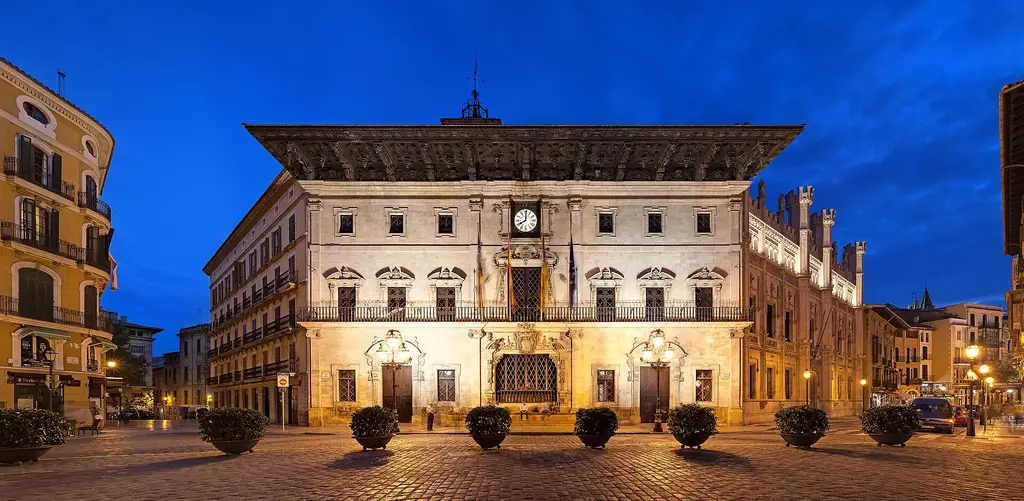
Palma is a Gothic cathedral, a Moorish palace and a lived-in old town wrapped around a bay that most of the island's visitors bypass on their way to a resort. Mallorca itself is a big island with a mountain range, a plain of almond trees and coves at both extremes; it suits people who drive or cycle and who treat the beach as one option among many.
What you can do
- 01See the cathedral's Gaudí ironwork and Barceló's ceramic chapel, then the Arab baths in the lanes behind it.
- 02Ride the wooden train to Sóller through the orange groves, then the tram down to the port for a swim.
- 03Drive or cycle the Tramuntana road from Valldemossa through Deià to Sa Calobra's hairpins, and turn back before dark.
- 04Eat ensaimada for breakfast, sobrasada on bread, and a caldereta of fish in a port restaurant.
- 05Walk Palma's Santa Catalina market in the morning, then the Es Baluard museum on the walls at sunset.
Where to stay · neighbourhoods
Stay in Palma's old town or Santa Catalina for a city visit; for the island, Sóller, Pollença or Artà make better bases than Magaluf or the Playa de Palma strip.
Unusual things
- ◦The Miró studio at Son Abrines on the western edge of Palma, left as he worked in it, with a museum beside it.
- ◦The Cartoixa at Valldemossa, where Chopin and George Sand wintered badly, and the village's stone lanes before ten.
- ◦Cap de Formentor's lighthouse road, closed to private cars in summer except by shuttle bus, with cliffs on both sides.
Day trips
Flight options
Routes come from OpenFlights (historical) and a 2026 route reference compiled from public timetables. Durations are the published schedule where we have it, otherwise a block-time model fitted on measured nonstop flights. Verify schedules with the airline before booking.
Flight.Deals has not measured this route from Venice yet, but it does measure Mallorca from Munich (€164 typical) and Rome (€91 typical).
Entry requirements · IT passport
Source: passport-index-data, March 2026 (coarse indicator), covering 258 of our 268 destinations for each of 199 passports. Always confirm with the destination's official site.
Airports
Distances are centre to airport derived · nonstop counts are our route reference for 2026, not every flight that exists.
Local transport
- Airport to city
- Bus A1, 25 min, €5; car useful for coves
- Car needed?
- Recommended for most of what is worth seeing
- Getting around
- Palma's airport is 15 minutes from the city by bus; the island has trains to Inca and Manacor and the Sóller line, but a car is needed for the coves and the mountains. Cycling the Tramuntana is a serious sport.
- Clock
- Same time as Venice (Europe/Madrid) derived
- Daylight
- 14.9 hours of daylight in June · sunrise 06:21, sunset 21:18 derived
- Currency
- EUR
Good to know
Summer roads to the coves fill early and the Tramuntana's hairpins are shared with coaches and cyclists; Sa Calobra's car park is full by mid-morning.
Alternatives at a similar price
Whole trip per person for 4 days from Venice in June, then the flight time; estimates, like the total above.
 Alicante
 Valencia
 Malta
Malta Lampedusa
 Istanbul
 Pantelleria