Strasbourg
You can be here in July for about €1,287, 4 days, 1 stop.
Why now
Good time in July: 26°C days, 14 rainy days.
The Christmas market season is the busiest and most expensive time, with rooms booked months ahead and bag checks on the bridges; the grape harvest in early autumn is calmer and the wine villages are at their best. Hotels also fill during the European Parliament's plenary weeks, roughly one a month, and most municipal museums close on Tuesdays.
Best months here: May, June, September. July is not one of them — the label above measures the month against a fixed bar, not against the rest of the year here. Daytime highs, sea temperature and rainy days from three years of Open-Meteo reanalysis; a rainy day is one with at least 1 mm of rain, which is the WMO threshold and not the same as "it drizzled".
The place
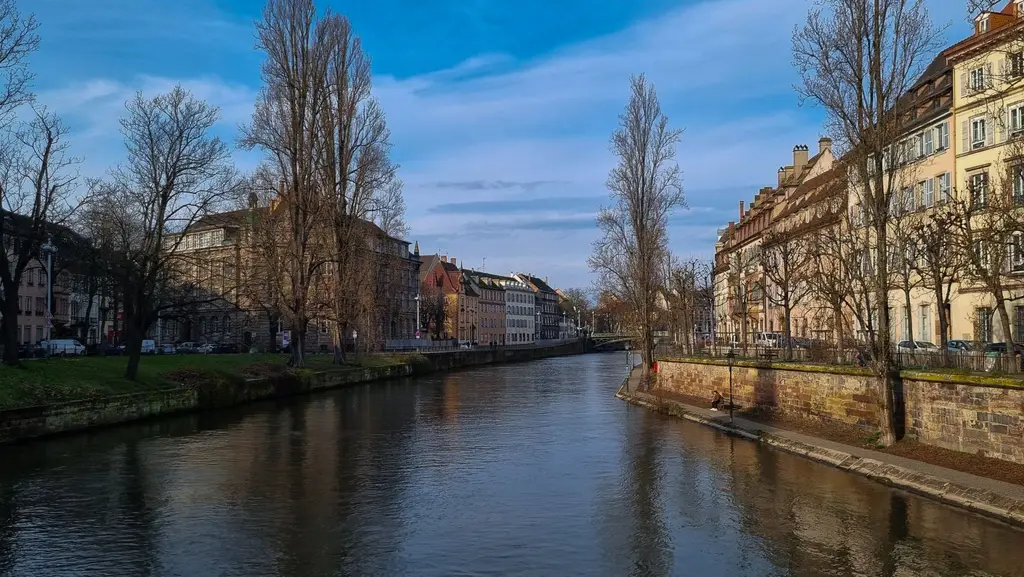
Strasbourg is a French city that has been German twice and keeps both accents: a Gothic cathedral in pink sandstone, winstubs serving choucroute with Riesling, and an imperial German quarter of broad avenues just north of the old island. It suits people who like food, architecture and short train rides; the Alsace vineyards begin twenty minutes out and the Rhine is a tram ride away.
What you can do
- 01Climb the cathedral platform (330 steps) in the morning, then wait for the astronomical clock's parade of apostles at half past twelve.
- 02Eat choucroute or baeckeoffe at a winstub away from the Petite France canals; book ahead and check the closing days.
- 03Walk the Neustadt from Place de la République to the university: German imperial avenues, Art Nouveau doorways, almost no tourists.
- 04Ride tram D across the Rhine to Kehl, then walk back over the Mimram footbridge through the Jardin des Deux Rives.
- 05Follow the Route des Vins by car through Riquewihr, Ribeauvillé and Kaysersberg, tasting Riesling and Gewurztraminer at growers' cellars.
Where to stay · neighbourhoods
Stay on the Grande Île or in Krutenau for a first visit; Petite France is pretty but all tour groups by day and dead by night, and the streets around the station are convenient rather than pleasant.
Unusual things
- ◦The Aubette 1928 on Place Kléber, De Stijl interiors by Theo van Doesburg, Jean Arp and Sophie Taeuber-Arp, restored and free to enter on limited afternoon hours.
- ◦Château Vodou, a collection of West African voodoo objects displayed inside a nineteenth-century water tower behind the station.
- ◦Natzweiler-Struthof in the Vosges, the only Nazi concentration camp on French soil, about an hour's drive; sober and well presented.
Day trips
Flight options
Routes come from OpenFlights (historical) and a 2026 route reference compiled from public timetables. Durations are the published schedule where we have it, otherwise a block-time model fitted on measured nonstop flights. Verify schedules with the airline before booking.
Entry requirements · IT passport
Source: passport-index-data, March 2026 (coarse indicator), covering 258 of our 268 destinations for each of 199 passports. Always confirm with the destination's official site.
Airports
Distances are centre to airport derived · nonstop counts are our route reference for 2026, not every flight that exists.
Local transport
- Airport to city
- Train, 10 min, €3
- Car needed?
- No — walkable or good public transport
- Getting around
- Six tram lines and walking cover the city, and a shuttle train links the airport with the central station in about ten minutes. The wine route needs a car, or patience with rural bus timetables from Colmar and Sélestat.
- Clock
- 6 hours behind Singapore (Europe/Paris) derived
- Daylight
- 15.8 hours of daylight in July · sunrise 05:42, sunset 21:28 derived
- Currency
- EUR
Alternatives at a similar price
Whole trip per person for 4 days from Singapore in July, then the flight time; estimates, like the total above.
 Mauritius
 Fiji
Fiji Pantelleria
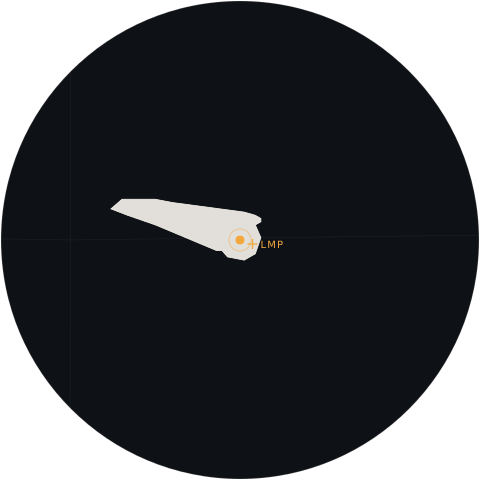 Lampedusa
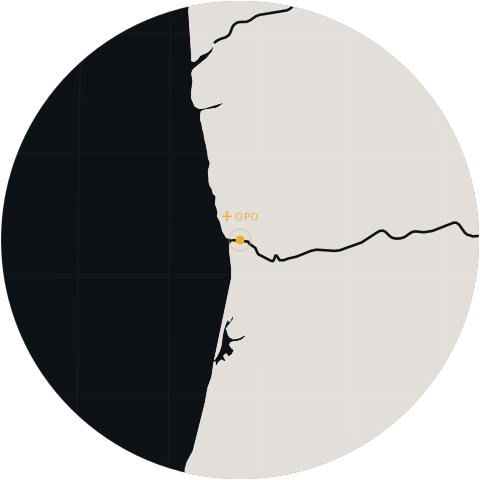 Porto
Porto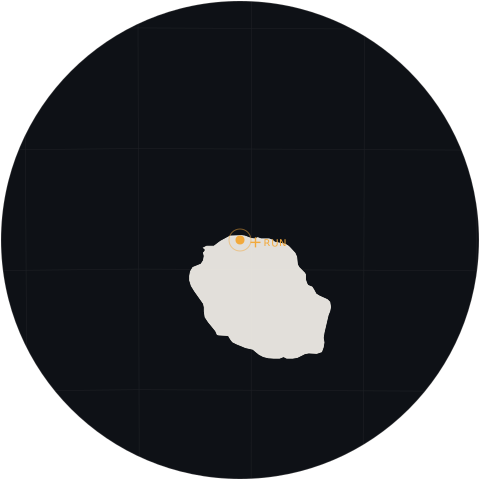 La Réunion