Gran Canaria
You can be here in March for about €670, 4 days, 1 stop.
Why now
Good time in March: 21°C days, sea 20°C.
The island is mild all year, and winter is the high season for the south; spring brings almond blossom to the mountains and autumn is the quietest. Las Palmas' Carnival in late winter and the WOMAD festival in autumn fill the capital.
Best months here: June, September, October. March is not one of them — the label above measures the month against a fixed bar, not against the rest of the year here. Daytime highs, sea temperature and rainy days from three years of Open-Meteo reanalysis; a rainy day is one with at least 1 mm of rain, which is the WMO threshold and not the same as "it drizzled".
The place
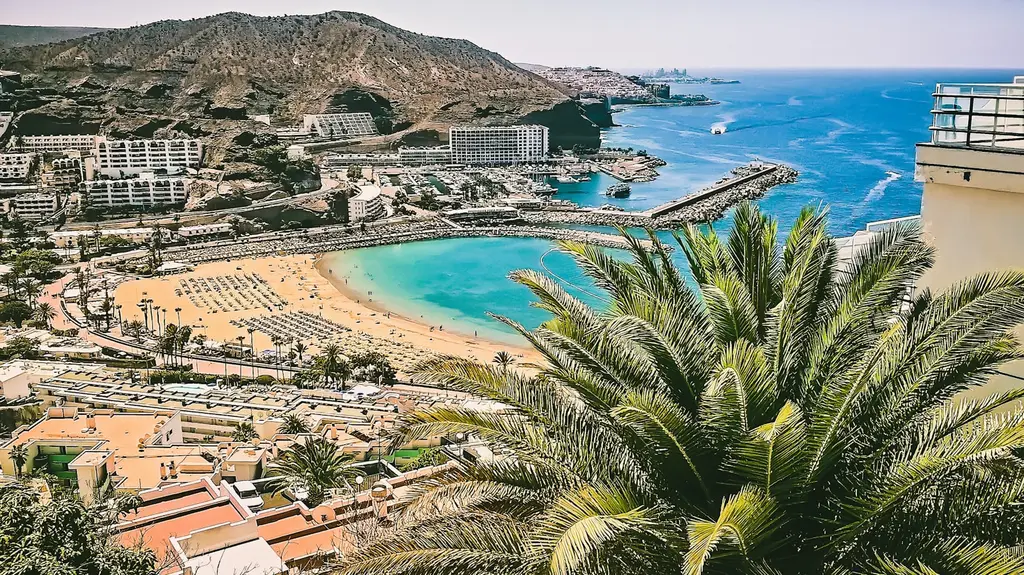
Gran Canaria is a round island of climates: dunes and resorts in the south, a working port capital with a city beach in the north-east, and a mountainous centre of pine forest, ravines and villages that gets cold. It suits people who like a city with a beach and a car for the interior; the southern resorts suit winter sun and little else.
What you can do
- 01Swim at Las Canteras, the city beach protected by a reef, then eat at the bars of the Mercado del Puerto.
- 02Walk the Maspalomas dunes at sunset from the lighthouse to the resort, then leave the resort behind.
- 03Drive the centre from Tejeda to the Roque Nublo, a half-hour walk to the basalt monolith with Teide across the water.
- 04See the Vegueta quarter's cathedral and the Casa de Colón, then the Painted Cave at Gáldar for pre-Hispanic geometry.
- 05Eat papas arrugadas, gofio and grilled cheese with mojo at a mountain restaurant in Tejeda or Artenara.
Where to stay · neighbourhoods
Stay in Vegueta or by Las Canteras for a first visit and drive to the mountains; the southern resorts suit people who want sun and a pool and do not intend to leave.
Unusual things
- ◦The Cenobio de Valerón, a honeycomb of pre-Hispanic grain stores cut into a cliff above the northern coast road.
- ◦The Bandama caldera outside Las Palmas, walked round the rim or down to the crater floor in about an hour.
- ◦Guayadeque ravine's cave houses and chapel near Agüimes, with restaurants set inside the rock.
Day trips
Flight options
Routes come from OpenFlights (historical) and a 2026 route reference compiled from public timetables. Durations are the published schedule where we have it, otherwise a block-time model fitted on measured nonstop flights. Verify schedules with the airline before booking.
Entry requirements · IT passport
Source: passport-index-data, March 2026 (coarse indicator), covering 258 of our 268 destinations for each of 199 passports. Always confirm with the destination's official site.
Airports
Distances are centre to airport derived · nonstop counts are our route reference for 2026, not every flight that exists.
Local transport
- Airport to city
- Global bus, 25–40 min, €2.30–4
- Car needed?
- Recommended for most of what is worth seeing
- Getting around
- The airport is between the capital and the south, about 25 minutes from each by bus or car; Global buses cover the island well, but a car is needed for the centre. Roads inland are slow.
- Clock
- 1 hour behind Palermo (Atlantic/Canary) derived
- Daylight
- 12 hours of daylight in March · sunrise 07:13, sunset 19:10 derived
- Currency
- EUR
Good to know
Calima dust from the Sahara can shut the airport for a day and the mountain roads see fog and rockfalls; check the forecast before driving inland.
Alternatives at a similar price
Whole trip per person for 4 days from Palermo in March, then the flight time; estimates, like the total above.
 Cairo
Cairo Hurghada
 Cape Verde
 Aqaba
Aqaba Tenerife
 Fuerteventura