Cartagena
You can be here in January for about €659, 4 days, direct.
Why now
Prime time in January: 32°C days, dry, sea 29°C.
The dry months are high season and the walled city fills, especially when two or three cruise ships dock at once; check the port schedule and plan the old town for early morning or evening on those days. The wetter months bring short afternoon downpours, lower prices and far fewer people.
Best months here: January, February, November. Daytime highs, sea temperature and rainy days from three years of Open-Meteo reanalysis; a rainy day is one with at least 1 mm of rain, which is the WMO threshold and not the same as "it drizzled".
The place
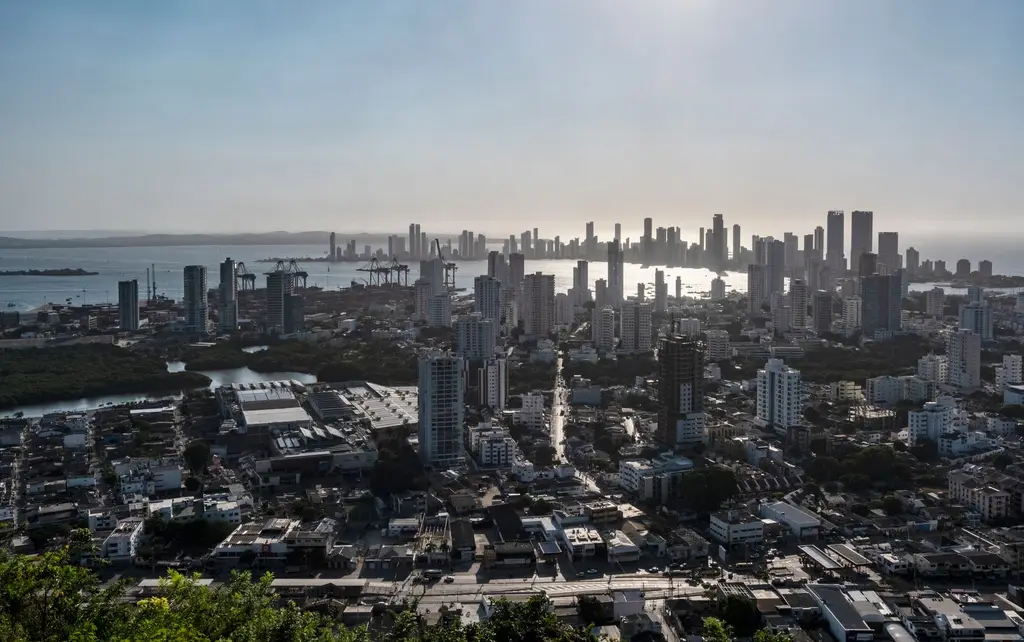
Cartagena is a walled Spanish port that has become a stage set for itself: bougainvillea over wooden balconies, horse carriages, cruise passengers at noon and locals reclaiming the streets after dark. The heat is the real texture, thirty degrees with humidity all year. It suits people who like an evening walk more than a beach day; the city beaches are poor.
What you can do
- 01Walk the ramparts at dusk from Baluarte de Santo Domingo, when the sea breeze finally arrives and the light turns orange.
- 02Eat an arepa de huevo from a street cart, then fried fish with coconut rice and patacones at a Bazurto market stall.
- 03Climb Castillo San Felipe de Barajas at opening time and go into the tunnels before the heat and groups arrive.
- 04Sit on the steps of Plaza de la Trinidad in Getsemaní with a beer and watch the street performers.
- 05See the Museo del Oro Zenú and the Palacio de la Inquisición on Plaza de Bolívar, both air-conditioned, both worth an hour.
Where to stay · neighbourhoods
Stay in San Diego for calm inside the walls or Getsemaní for the evenings; Centro is beautiful but hot and busy at midday, and Bocagrande is a beach strip that is not the reason to come.
Unusual things
- ◦Bazurto, the city's real market, a sprawl of fish, fruit and lunch counters that tourists rarely reach; go with a guide or a strong stomach.
- ◦Convento de la Popa, a monastery on the city's one hill with the only full view of the bay, walls and islands; take a taxi up, not the road on foot.
- ◦La Boquilla, a fishing village north of the airport where local fishermen paddle canoes through the mangrove channels at dawn.
Day trips
Flight options
Routes come from OpenFlights (historical) and a 2026 route reference compiled from public timetables. Durations are the published schedule where we have it, otherwise a block-time model fitted on measured nonstop flights. Verify schedules with the airline before booking.
Entry requirements · IT passport
Source: passport-index-data, March 2026 (coarse indicator), covering 258 of our 268 destinations for each of 199 passports. Always confirm with the destination's official site.
Airports
Distances are centre to airport derived · nonstop counts are our route reference for 2026, not every flight that exists.
Local transport
- Airport to city
- Taxi, 15 min, ~€5
- Car needed?
- No — walkable or good public transport
- Getting around
- The walled city and Getsemaní are walkable; taxis are unmetered, so agree the fare before getting in, and app rides work despite the grey legal status. Rafael Núñez airport is 15 minutes by taxi from the old town.
- Clock
- 1 hour ahead of Mexico City (America/Bogota) derived
- Daylight
- 11.6 hours of daylight in January · sunrise 06:23, sunset 17:58 derived
- Currency
- COP
Good to know
Persistent street selling and offers of drugs around Getsemaní at night are the main nuisance; a firm no and walking on is enough, and the heat is the greater risk, so walk early or after five.
Alternatives at a similar price
Whole trip per person for 4 days from Mexico City in January, then the flight time; estimates, like the total above.
 Lima
Lima Cancún
 Bogotá
 Medellín
 Panama City