Okinawa
You can be here in November for about €1,349, 4 days, 1 stop.
Why now
Prime time in November: 25°C days, sea 27°C, fares below average.
The rainy season and the typhoon months bracket the summer, so the shoulder months are drier and calmer with water still warm enough to swim; Japanese holidays fill flights and hire cars. Winter is mild, grey and off-season, good for whale watching around Kerama.
Best months here: October, November, December. Daytime highs, sea temperature and rainy days from three years of Open-Meteo reanalysis; a rainy day is one with at least 1 mm of rain, which is the WMO threshold and not the same as "it drizzled".
The place
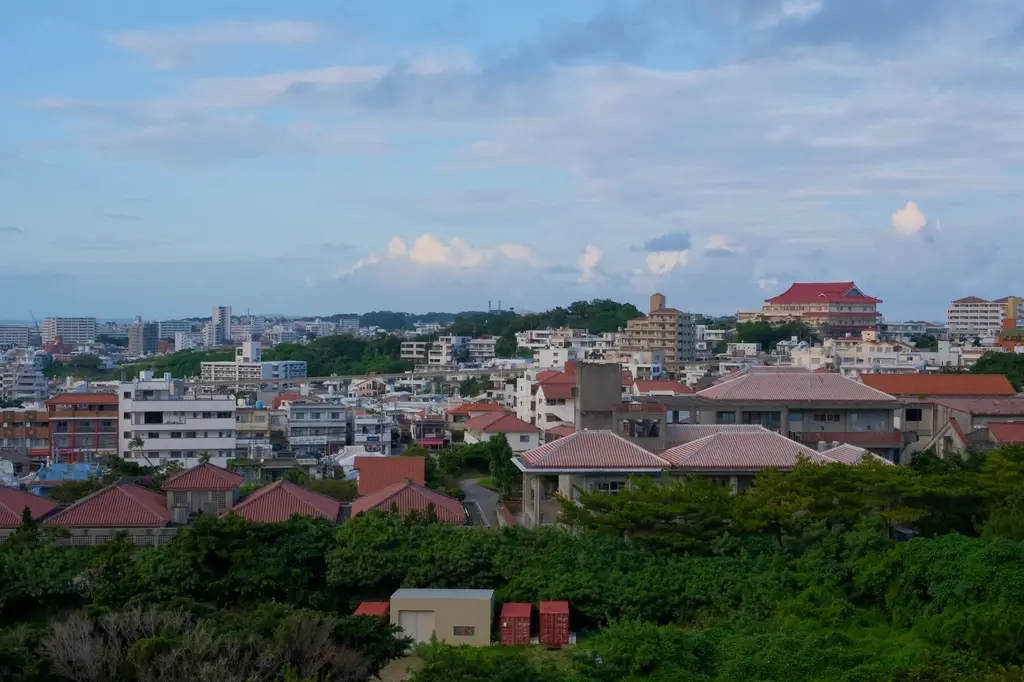
Okinawa is Japan with the volume turned down and the humidity up: the Ryukyu kingdom's own language, food and castles, US bases along the main island's middle, and coral water that gets clearer the further you go from Naha. It suits divers, people who want Japan without the crowds, and anyone willing to drive.
What you can do
- 01Eat goya champuru and Okinawa soba at a shokudo in Naha's Makishi market, then browse the fish stalls downstairs.
- 02Snorkel or dive the Blue Cave at Maeda Point, early, before the boats bring the groups.
- 03Walk the rebuilt walls of Shuri Castle and the Shikinaen royal garden nearby, on the Yui monorail.
- 04Take the ferry to Zamami or Tokashiki in the Kerama islands for water clearer than anything on the main island.
- 05Visit the Peace Memorial Park and Himeyuri monument in the south, then the Gyokusendo cave at Okinawa World.
Where to stay · neighbourhoods
One night in Naha for the market and monorail, then move to the west coast or Motobu, or skip the main island's resorts and go to Zamami. Chatan's American Village is convenient for bases and burgers, not much else.
Unusual things
- ◦Yomitan's Zakimi castle ruins and the pottery village of Yachimun no Sato, kilns and shops in the same hamlet.
- ◦The Sefa-utaki sacred grove in the south, a limestone site of Ryukyuan worship with a view to Kudaka island.
- ◦Iriomote in the Yaeyama islands, a jungle island of mangroves and river kayaking, a flight and ferry away.
Day trips
Flight options
Routes come from OpenFlights (historical) and a 2026 route reference compiled from public timetables. Durations are the published schedule where we have it, otherwise a block-time model fitted on measured nonstop flights. Verify schedules with the airline before booking.
Entry requirements · IT passport
Source: passport-index-data, March 2026 (coarse indicator), covering 258 of our 268 destinations for each of 199 passports. Always confirm with the destination's official site.
Airports
Distances are centre to airport derived · nonstop counts are our route reference for 2026, not every flight that exists.
Local transport
- Airport to city
- Monorail, 15 min, ~€2; car recommended
- Car needed?
- Recommended for most of what is worth seeing
- Getting around
- The Yui monorail links the airport and Naha; beyond that a hire car is the only realistic way on the main island, booked well ahead. Ferries serve the Kerama islands from Tomari port, and the Yaeyama and Miyako groups are flights.
- Clock
- 17 hours ahead of Los Angeles (Asia/Tokyo) derived
- Daylight
- 10.9 hours of daylight in November · sunrise 06:48, sunset 17:41 derived
- Currency
- JPY
Good to know
Typhoons can ground flights and ferries for days in late summer and early autumn, and box jellyfish nets are up on beaches for a reason.
Alternatives at a similar price
Whole trip per person for 4 days from Los Angeles in November, then the flight time; estimates, like the total above.
 Lima
Lima New Orleans
 Hong Kong
 Miami
Miami Hawaii
 Lanzarote