Siem Reap
You can be here in November for about €420, 4 days, direct.
Why now
Good time in November: 31°C days, 14 rainy days, fares below average.
Temple visits are governed by heat more than by season: the dry months from November to March are cooler and busy, the green season brings rain in the afternoons but full moats, empty galleries and lower humidity in the mornings. Multi-day passes make a slower rhythm possible.
Best months here: January, February, December. November is not one of them — the label above measures the month against a fixed bar, not against the rest of the year here. Daytime highs, sea temperature and rainy days from three years of Open-Meteo reanalysis; a rainy day is one with at least 1 mm of rain, which is the WMO threshold and not the same as "it drizzled".
The place
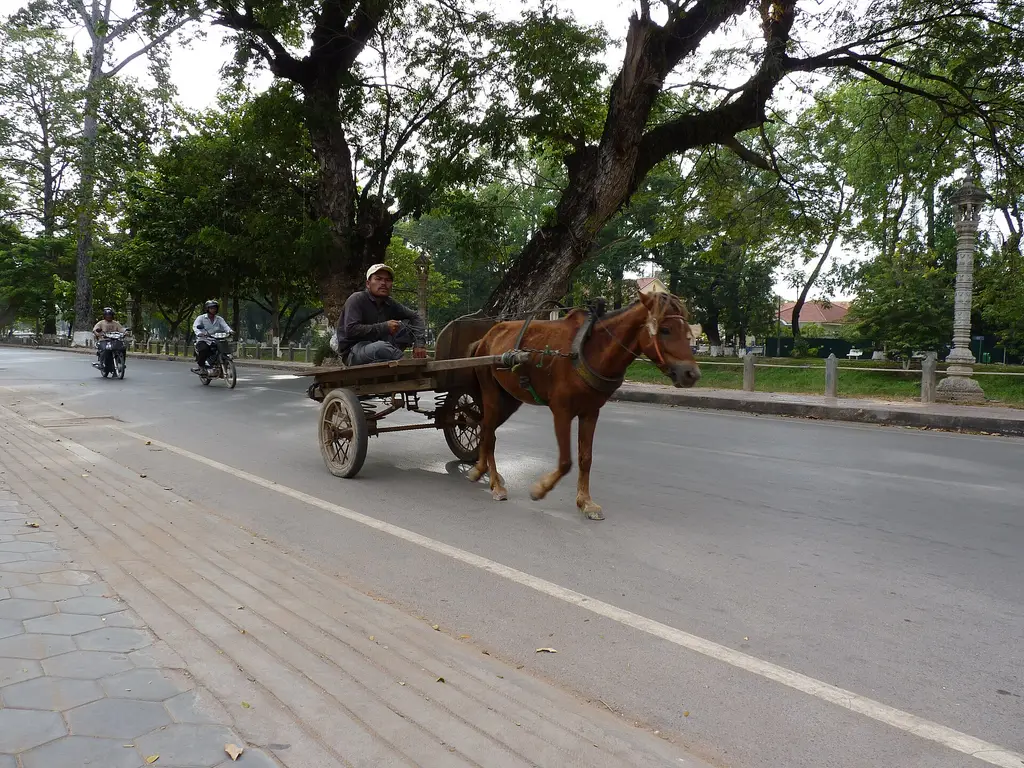
Siem Reap is a small provincial town that exists, for most visitors, as the base for Angkor: the temples are the point, and the town is where you eat and sleep between them. It suits people willing to get up before dawn, cycle in heat, and give the ruins more than the standard one-day loop; the Pub Street strip is the price you pay.
What you can do
- 01Watch sunrise at Angkor Wat from the western causeway, then leave the crowds behind by walking the bas-relief galleries.
- 02Spend a full morning in Angkor Thom: the Bayon's faces, the Terrace of the Elephants, then Baphuon's stepped pyramid.
- 03Cycle the small circuit at dawn, stopping at Ta Prohm before the tour buses arrive after eight.
- 04Take a tuk-tuk out to Banteay Srei for its pink sandstone carving, continuing to the river carvings at Kbal Spean.
- 05Eat fish amok and grilled river fish at the Old Market, then walk the riverside to the Wat Bo pagodas.
Where to stay · neighbourhoods
Stay in Wat Bo or Wat Damnak for quiet nights within walking distance of the market; avoid rooms directly on Pub Street unless you plan to be part of it. Resorts along the airport road are isolated and depend on tuk-tuks.
Unusual things
- ◦Beng Mealea, a jungle-swallowed temple about 60 km east, largely unrestored and walkable on boardwalks through fallen masonry.
- ◦The Angkor National Museum's gallery of a thousand Buddha images, useful before the temples for reading what you see.
- ◦Phare, the Cambodian Circus, a nightly performance by graduates of a Battambang arts school, closer to theatre than to acrobatics.
Day trips
Flight options
Routes come from OpenFlights (historical) and a 2026 route reference compiled from public timetables. Durations are the published schedule where we have it, otherwise a block-time model fitted on measured nonstop flights. Verify schedules with the airline before booking.
Entry requirements · IT passport
Source: passport-index-data, March 2026 (coarse indicator), covering 258 of our 268 destinations for each of 199 passports. Always confirm with the destination's official site.
Airports
Distances are centre to airport derived · nonstop counts are our route reference for 2026, not every flight that exists.
Local transport
- Airport to city
- Shuttle bus, 60 min, ~€8
- Car needed?
- No — walkable or good public transport
- Getting around
- Tuk-tuks are the standard way to the temples, hired by the day; bicycles work for the small circuit if you start early. The new Siem Reap–Angkor airport is about 40 km east of town, roughly an hour by road.
- Clock
- 1 hour behind Kuala Lumpur (Asia/Phnom_Penh) derived
- Daylight
- 11.5 hours of daylight in November · sunrise 06:04, sunset 17:35 derived
- Currency
- USD
Good to know
Heat and dehydration are the real hazards at the temples; carry water and rest in the middle of the day.
Alternatives at a similar price
Whole trip per person for 4 days from Kuala Lumpur in November, then the flight time; estimates, like the total above.
 Hanoi
Hanoi Chiang Mai
 Da Nang
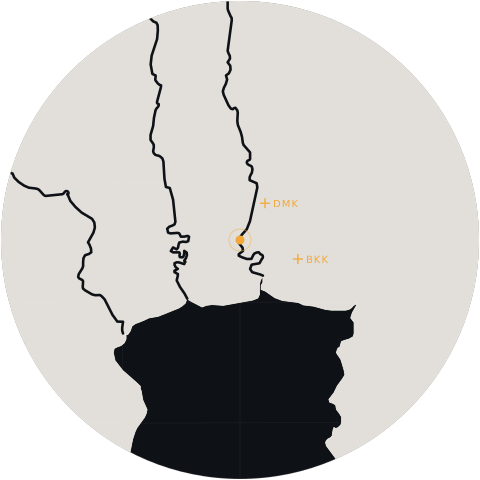 Bangkok
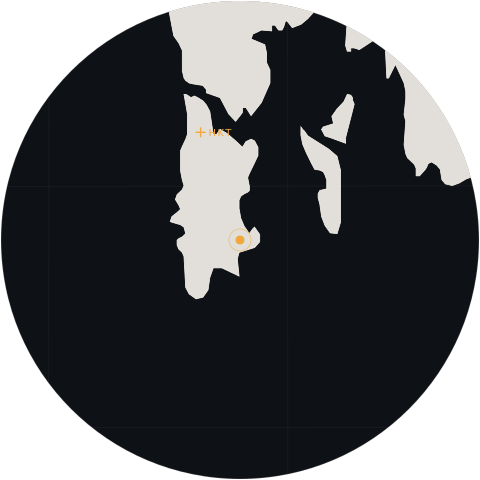 Phuket
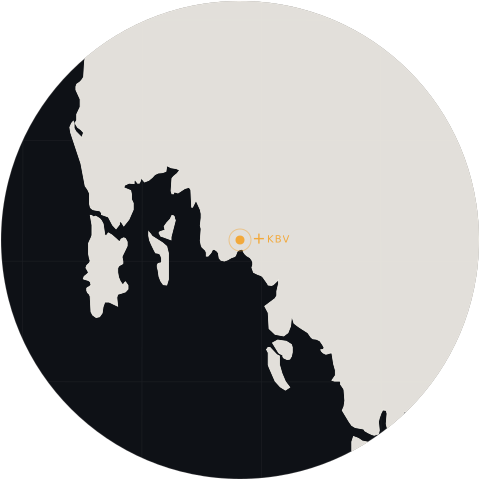 Krabi
Krabi.jpg)